
Philippine Eagle Expedition on Mindanao
Tour Date:
Jan 9-15, 2027 (PICOP post tour Jan 15-18)
Tour Price (Per Person):
Main tour $2400. Single supplement $220. Full 10 days, including the post-tour, is $2900. Single supplement $280. Price Include flight from Luzon to Mindanao, and all food.
Tour Type:
The Prime target is the Philippine Eagle. This tour contains a fair amount of walking. While cool at Mt Kitanglad, it is very hot and tropical conditions at PICOP for the pre-tour extension.
The lodging at the Del Monte site is quite basic, but very good for the remaining days. The birding is extremely rewarding.
Domestic flights, food, lodging, entrance fees, and expert local guides, together with Gunnar Engblom.
Philippines extensions are also available for 2027
Palawan -follows right after Mindanao.
We can also set up extensions to Luzon, Bohol, and Negros on request.
Ask us about the details.
Description
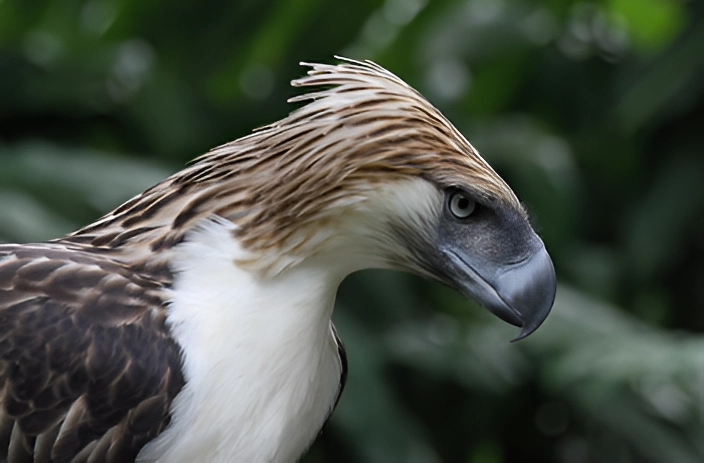
The Philippines, a nation with more than 7,000 islands covering a land area only a little greater than the state of Texas, but with more endemic birds than USA, Europe and China combined. With 270 endemic bird species (and increasing) it is no wonder that the Philippines is a top destination for all birdwatchers, and the most wanted bird for all visitors is Philippine Eagle. Critically Endangered with population estimates as low as 100 birds and declining, it is an increasingly difficult bird to see. Although distributed through the islands of Luzon, Samar, Leyte and Mindanao, it is only regularly seen by birdwatchers on Mindanao in the south.
This tour is devised to give the maximum chance of seeing Philippine Eagle in the wild, spending four days on Mount Kitanglad, and for those who want to additionally cover the lowland species there is an option to spend two days in the famous PICOP forest after the Kitanglad experience.
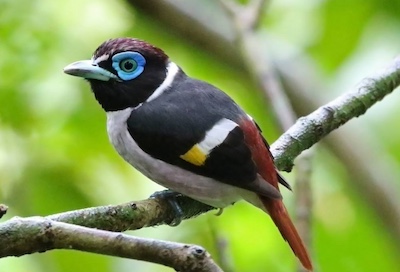
Mindanao is the second-largest island in the Philippines, a land of dramatic mountains, misty forests, and rich cultural heritage. For birders, it is legendary: home to some of the archipelago’s most iconic and range-restricted species, including the magnificent Philippine Eagle, dazzling Azure-breasted Pitta, and rare forest jewels like Celestial Monarch and Wattled Broadbill.
Climate
In January, Mindanao is relatively cool and less humid, as it is the dry season. Daytime temperatures typically range between 24–30°C (75–86°F) in the lowlands and 15–20°C (59–68°F) in the mountains. Rain is always possible in the tropics, especially at higher elevations such as Mount Kitanglad, so participants should be prepared with waterproof clothing and sturdy footwear.
Culture and language
Filipino (Tagalog) and English are the national languages, but Mindanao also has its own local languages including Cebuano (Bisaya). English is widely understood in hotels and by guides.
Currency
The local currency is the Philippine Peso (PHP). The exchange rate in early 2025 is around PHP 56 = 1 USD, though it may vary slightly. ATMs are available in cities like Cagayan de Oro and Davao, and credit cards are accepted in most hotels. In rural areas and small towns, cash is essential.
DETAILED ITINERARY
Mindanao Philippine Eagle Main Tour
International arrivals, Manila
Participants arrive at Manila’s Ninoy Aquino International Airport (NAIA). For those arriving late or wishing to rest before the tour begins, an optional overnight is arranged at the Belmont Hotel, conveniently located beside Terminal 3.
Day 1 Manila – Cagayan de Oro – Mount Kitanglad (Del Monte Lodge)
We meet up at 4:45 at Terminal 3 for the flight to Cagayan de Oro (0645–0830 hrs). From Cagayan de Oro, a 3.5-hour drive takes us into Bukidnon Province, stopping for an early lunch on the way.
In the early afternoon, we arrive at Dalwangan, where vehicles bring us 30 minutes up a rough track to the end of the road. From here, our gear is carried by porters and we begin the 1–2 hour uphill walk to Del Monte Lodge. The trail passes through small farm plots, pine plantations, and finally montane forest, giving us our first Mindanao montane endemics, including Grey-hooded Sunbird and Rufous-headed Tailorbird.
The Del Monte Lodge itself is a basic but comfortable accommodation, and our home for the next three nights. Meals are prepared by local families. The grounds themselves are excellent for birding, with fruiting trees and flowering shrubs that attract sunbirds, flowerpeckers, and white-eyes. Being close to the forest, we can expect to record Yellow-breasted Fruit-dove, Mindanao Hornbill, and possibly Hombron’s (Blue-capped) Kingfisher.
Other targets during the day include: Coppersmith Barbet, Grey-hooded Sunbird, Warbling White-eye, Philippine Hanging-Parrot.
At dusk, we will watch for the display flights of Bukidnon Woodcock. After dark, we will try for Philippine Frogmouth, Giant Scops-owl, and Mindanao Scops-owl.
Overnight: Del Monte Lodge.
Day 2. Mount Kitanglad – Philippine Eagle watch point
After an early breakfast, we hike 1–2 hours, at a gentle birding pace through farmland and forest fragments, where we will look out for Black-and-cinnamon Fantail, Yellow-bellied Whistler, and Sulphur-billed Nuthatch. In less than two hours, we should reach the eagle watchpoint, a grassy ridge overlooking a deep forested valley and the place where most bird tours encounter the Philippine Eagle.
The site gives a breathtaking view over the extensive forests of Mount Kitanglad, the range home to four pairs of Philippine Eagles. Along with the resident form of Crested Honey-Buzzard, Rufous-bellied Eagle, and Pinsker’s Hawk-Eagle, we hope to find the Philippine Eagle soaring over the forest canopy, overhead, or even perched.
Other species we will look out for today: Mindanao Racquet-tail, Mindanao Hornbill, McGregor’s Cuckooshrike, White-cheeked Bullfinch,and Stripe-breasted Rhabdornis.
Another chance for Bukidnon Woodcock at dusk.
Overnight: Del Monte Lodge.
Day 3. Mount Kitanglad – higher elevations.
Today, we can either return to the eagle watch point or ascend higher into the mossy forests above. The trail climbs steeply through montane oak and laurel, eventually reaching a stunted mossy forest with orchids, tree ferns, and thick undergrowth. The targets include Apo Myna, Apo Sunbird, Flame-crowned Flowerpecker, Mindanao White-eye, Mountain Shrike, Rufous-headed Tailorbird, and Elegant Tit.
Overnight: Del Monte Lodge.
Day 4. Mount Kitanglad – Cinchona / Intavas – Malaybalay
We bird the forest around Del Monte in the morning before hiking down the trail to the drop point. After rejoining our vehicle, we drive 1.5 hours to the Cinchona Forest Reserve or nearby Intavas, with time for afternoon birding in mid-elevation habitats. The area includes secondary forest, plantations, and agricultural clearings with remnant trees with species like Red-eared Parrotfinch, Yellowish Bulbul, Philippine Hanging-Parrot, Yellow-bellied Whistler, and Mindanao Hornbill.
Night birding: Dusk birding may produce Philippine Frogmouth, Mindanao Scops-Owl or Philippine Nightjar.
Overnight: Loiza’s Pavilion, Malaybalay – a comfortable inn with private rooms, hot water, and Filipino-style meals.
Day 5. Cinchona – Davao – Philippine Eagle Center.
We bird Cinchona until mid-morning before beginning the 4-hour transfer south to Davao, with lunch en route. In the afternoon, we visit the Philippine Eagle Center, which houses a breeding and conservation program for the eagle and other raptors.
Target species (Cinchona): Mindanao Pygmy Babbler, Philippine Coucal,
Target species (Eagle Center grounds): Rufous-lored Kingfisher and Southern Silvery Kingfisher.
Overnight: Malagos Garden Resort – comfortable resort with landscaped grounds, pools, and modern amenities.
Day 6. Malagos – Eden Nature Park.
At Malagos, we search rivers and streams for Southern Silvery Kingfisher. We then continue to Eden Nature Park, a mountain resort surrounded by gardens, pine groves, and patches of forest. Trails lead into thicker vegetation where several key species occur.
Target species: Cryptic Flycatcher, Japanese Night Heron (rare winter visitor) and Brown-breasted Kingfisher.
Night birding: Owling after dinner for Philippine Frogmouth, Philippine Nightjar, and Giant Scops-Owl.
Overnight: Eden Resort – pleasant cabins and rooms set in landscaped gardens.
Day 7. Eden – Davao airport (end of main tour)
Early morning excursion for the endemic Whiskered Flowerpecker, then final birding on Eden’s trails. After breakfast, transfer to Davao airport for afternoon flights to Manila.
End of main tour– or continuation to PICOP for the extension.
Post-tour Extension
PICOP Forest & ComVal
Day 7 (pm). Davao – Panabo – Bislig
The extension group heads north to Panabo, where tern roosts sometimes include Chinese Crested Tern among many Whiskered Tern and a few White-winged Tern. We continue to Bislig for late-afternoon marsh birding targeting Philippine Duck, Eastern Grass-owl, and Philippine Nightjar.
Overnight: Paper Country Inn, Bislig – functional and simple local accommodation.
Day 8. PICOP logging concession – full day
We explore the legendary forest of PICOP (Paper Industries Corporation of the Philippines, a former logging concession), once a vast forest, now fragmented, but still home to many sought-after endemics. PICOP holds one of the largest bird lists of any site in the Philippines, and over 2 days it is possible to record more than 100 species, around half of them endemics. Birding is from logging roads through dipterocarp forest.
After our first of three nights in Bislig, we head out early to the forest to try for Everett’s Scops-owl, Giant Scops-owl, and Mindanao Boobook before dawn. Among the targets we will search for Celestial Monarch, Short-crested Monarch, Azure-breasted (Steere’s) Pitta and Philippine Trogon.
All three of Mindanao’s Hornbills are available here with Rufous Hornbill, Writhed Hornbill, and Mindanao Hornbill.
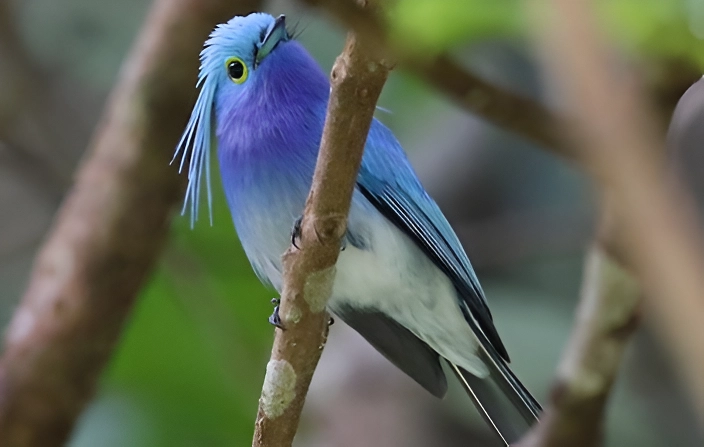
Mixed flocks can hold Mindanao Blue Fantail, Rufous Paradise-flycatcher, Rufous-fronted Tailorbird, and others. In the heat of the day, the raptors remain active, including Pinsker’s Hawk-eagle, Philippine Serpent-eagle, and Philippine Honey-buzzard.
The Philippines and PICOP in particular hold an amazing array of doves, from Short-billed and Amethyst Brown-Dove, to the colorful Yellow-breasted Fruit-dove, and the impressive Pink-bellied Imperial-pigeon. With luck, we may encounter the elusive Mindanao Bleeding-heart.
Other targets include Azure-breasted Pitta, Rufous-lored Kingfisher, Philippine Trogon, and Wattled Broadbill.
Overnight: Paper Country Inn.
Day 9. PICOP – second day.
Another full day in different compartments, focusing on rarer or more skulking birds.
Additional targets: Blue-capped Kingfisher, Little Slaty Flycatcher, Philippine Oriole, Philippine Fairy-bluebird, Metallic-winged Sunbird, and Striped Flowerpecker.
Overnight: Paper Country Inn.
Day 10 – ComVal
Compostela Valley (ComVal) – Davao – Manila
Early departure to ComVal foothills, where birding tracks through secondary and low montane forest give a final chance at specialties such as the range-restricted Lina’s Sunbird, but we also have a chance of Cinnamon Ibon, Mindanao White-eye, and Red-eared Parrotfinch, as well as Stripe-breasted Rhabdornis, Elegant Tit, and Philippine Serpent-eagle. Return to Davao for lunch with a stop at Panabo if required for Chinese Crested Tern. Then to Davao airport for afternoon flight to Manila for end of tour on Flight DVO-MNL Philippine Airlines PR 2816 1410-1610hrs arriving NAIA T2, or for Palawan extension Flight DVO-PPS 5J4760 1325-1510hrs, to Cockatoo roost, Cana island for Mantanai Scops Owl, to Citystate Asturias hotel check-in, overnight’.
End of extension. Optional overnight at Belmont Hotel.