
Culture & Wildlife Exploration in Beijing & Xi’an

Tour Date:
Nov 20-25. Main tour. Cultural Highlights, such as the Great Wall and Terracotta Army with spectacular birding.
Nov 26-30. Siberian Cranes and Yunnan.
Dec 1-6. Sichuan for pheasants and the unique bird family Przevalski’s Pinktail.
Tour Price (Per Person):
USD 2720. Single supplement $220 (Does not include bullet train or flight to Xi’an, although we can help organize this. Bullet train back to Beijing is included)
Extensions:
Siberian Cranes and Yunnan: TBA. Ballpark. $2250. Single room $200
Sichuan: Cost: TBA. Ballpark $2700. Single room $250
Tour Type:
Easy birding and culture
Culture & Wildlife Exploration in Beijing & Xi’an
Three China Birding Tours back to back
7WB has long wanted to expand our short culture and birding China program with a couple of extensions. All three can be taken back-to-back and would be 17 days in total, but you can obviously just sign up for one or two of these if you like.
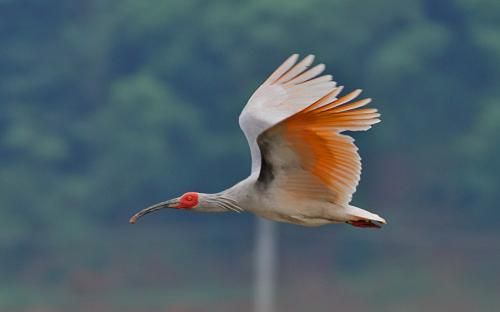
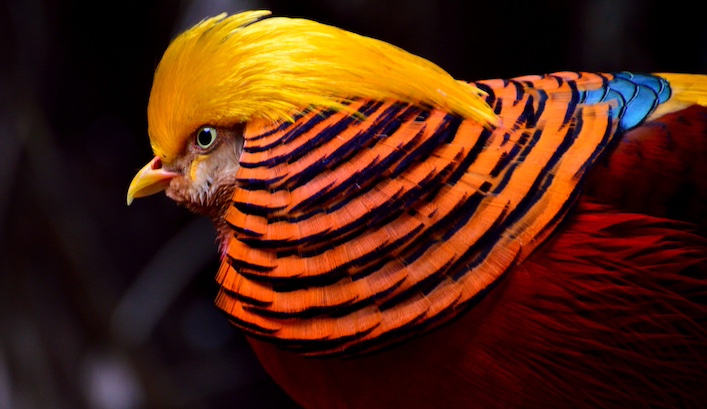
Our standard China Tour with the combination of culture and birding runs Nov 20-25. Visit classic sites like the Terracotta Army, the Great Wall and the Forbidden City in Beijing, as well as some bucket list birding for Crested Ibis and Golden Pheasant.
Next follows Nov 26-30, an exciting two-part trip for Siberian Cranes at the wetlands around Poyang Lake, followed by three days in the species-rich subtropical forests of Yunnan.
The last part, Dec 1-6, focuses on pheasants in Sichuan and Przevalski’s Pinktail – the only member of a monotypic bird family. Family listers – pay attention.
Bucket List China and iconic birds.
Day 0. Arrival in Xi’an.
You probably arrive a day early in Xi’an. There are direct flights to Xi’an from various international cities, but coming from the US or Europe, you will likely need a stopover. If you need help with getting a hotel or high-speed train ticket, let us know. Airport or train station transfer as well as the hotel, is included on this first day. Dinner or other activities are not included.
Day 1: Xi’an Cultural Day with City Wall, Muslim Quarters, and Terra Cotta Army.
In the morning, we tour the Xi’an City Wall. The Xi’an City Wall is one of the oldest, largest, and best-preserved ancient city fortifications in China. Originally built during the Ming Dynasty on the foundations of the Tang imperial capital, the wall forms a massive rectangular defense system surrounding the historic center of Xi’an. Visitors can walk or cycle along the broad ramparts, passing watchtowers, gates, and battlements that once protected the city. From the top, the contrast between the ancient wall and the modern city skyline offers a vivid glimpse into Xi’an’s long and remarkable history as the eastern starting point of the Silk Road.
After leaving the wall, we visited the Xi’an Muslim Quarter. The Muslim Quarter is one of the most vibrant and culturally distinctive neighborhoods in Xi’an. Located near the historic Drum Tower, this lively district has been home to the city’s Hui Muslim community for centuries. Narrow streets are lined with traditional food stalls, bakeries, and small restaurants serving famous local specialties such as lamb skewers, hand-pulled noodles, and sesame pastries. Beyond its culinary appeal, the quarter reflects the cultural exchanges that once flourished along the Silk Road. Walking through the bustling streets offers visitors a lively blend of history, culture, and authentic local flavor.
In the afternoon, we explore the Terracotta Warriors. The Terracotta Warriors are one of the most extraordinary archaeological discoveries of the 20th century. Buried for over two thousand years near the tomb of China’s first emperor, Qin Shi Huang, thousands of life-sized clay soldiers, horses, and chariots were created to guard the emperor in the afterlife. Each figure displays unique facial features and intricate armor details. Displayed in vast excavation pits, the army offers a powerful glimpse into the military organization, craftsmanship, and ambition of the Qin Dynasty. The site is now a UNESCO World Heritage treasure and a highlight of any visit to Xi’an.
Day 2: Xi’an to Yangxian (2000m)
We take the high-speed train to Yangxian. Yangxian is a unique birding spot where we can see the endemic and endangered Crested Ibis, which was once considered extinct until 7 of them were found in Yangxian in the early 1980s. The population has gradually grown to over 3000. After arriving, we explore the area in search of Crested Ibis and other birds, such as Red-billed Blue-Magpie, Oriental Magpie, Asian Tit, Collared Finchbill, Brown-breasted Bulbul, Plumbeous, Daurian, and White-capped Redstarts.
Day 3: Yangxian to Xi’an and on to Beijing.
In the morning, we visit a bird hide waiting for the Golden Pheasant. Other birds possibly include Chinese Bamboo-Partridge, Asian Barred Owlet, Collared Owlet, Mountain Bulbul, Yellow-bellied, Black-bibbed, and Green-backed Tits, White-collared Yuhina, David’s Fulvetta, Vinous-throated Parrotbill, Rufous-faced Warbler, Hodgson’s Redstart, Green Shrike-Babbler, Streak-breasted Scimitar-Babbler, White-browed Laughingthrush, Rufous-faced Warbler, Red-billed Starling, Eurasian Jay, Yellow-throated Bunting, and White-rumped Munia.
After the birding, we take the high-speed train to Beijing via Xi’an and either spend the night near the West Beijing Station or drive on to Yanqing, closer to the next day’s birding site, as well as closer to the Great Wall.
Day 4: Guanting Reservoir and the Forbidden City.
We drive a short distance to Guanting Reservoir and spend the morning there in search of waterfowls including Gadwall, Chinese Spot-billed Duck, Baer’s Pochard, Ferruginous Pochard, Tufted Duck, Smew, Black-necked Grebe, Great Crested Grebe, Eurasian Spoonbill, as well as other birds like Merlin, Azure-winged Magpie, Marsh Tit, Bearded Reedling, Pallas’s Bunting and Falcated Duck, Chinese Gray Shrike, and Red-breasted Merganser.
In the afternoon, we continue into the forested hills of Songshan, a very different habitat from the wetlands of Guanting. Here we search the scrubby slopes, woodland edges and quiet forest roads for resident and wintering passerines such as Beijing Babbler, Pere David’s Laughingthrush, Vinous-throated Parrotbill, Yellow-bellied Tit, Silver-throated Tit, Coal Tit, Marsh Tit, Willow Tit, Godlewski’s Bunting, Meadow Bunting, Yellow-throated Bunting, Chinese Beautiful Rosefinch, Daurian Redstart, Dusky Thrush and Naumann’s Thrush, with chances for Grey-capped Pygmy Woodpecker, Great Spotted Woodpecker and Grey-headed Woodpecker.
Day 5: The Great Wall and the Forbidden City.
We shall start the morning with the Badaling section of the Great Wall, which is the most famous and best-preserved section near Beijing. Originally constructed during the Ming Dynasty, this strategic mountain pass protected the northern approaches to the capital. The wall here winds dramatically across rugged ridgelines, with watchtowers rising at regular intervals along the stone pathway. Carefully restored and easily accessible, Badaling allows visitors to walk along one of the most iconic monuments in human history while enjoying sweeping views of the surrounding mountains. It remains one of the most impressive places to experience the grandeur of the Great Wall.
You may even spot some of Beijing’s specialities such as Beijing Babbler, Pere David’s Laughingthrush, Chinese Nuthatch, Willow Tit, Silver-throated Tit, and Godlewski’s Bunting. On rare occasions in the winter, even the Siberian Accentor, or Pallas’s Rosefinch.
In the afternoon, we visit the Forbidden City. Located in the heart of Beijing, the Forbidden City served as the imperial palace for the Ming and Qing dynasties for nearly 500 years. Today, it is known as the Palace Museum and stands as one of the largest and best-preserved ancient palace complexes in the world. With its grand halls, golden roofs, and vast courtyards, the complex reflects the power and ceremonial life of China’s imperial court. Visitors can explore magnificent architecture, priceless cultural relics, and a remarkable collection of imperial art while walking through the historic center of traditional Chinese civilization.
Some common city birds you may see in the Forbidden City include Oriental Turtle-Dove, Spotted Dove, Great Spotted Woodpecker, Gray-capped Pygmy Woodpecker, Common Hoopoe, Red-throated Thrush, Chinese Blackbird, White-cheeked Starling, Crested Myna, Light-vented Bulbul, Yellow-billed Grosbeak, and Azure-winged Magpie.
After the visit, you will be dropped off at your Beijing Hotel (not included) or at the airport. Let us know if you need help booking a hotel.
End of service.
Extensions
Nov 26–30. Siberian Crane and Yunnan birding before Sichuan Pheasants and Pinktail (Dec 1-6).
Before our main Sichuan adventure begins on Dec 1, there is an opportunity to add a short but immensely rewarding pre-extension combining two very different birding experiences: the great winter wetlands of Poyang Lake and the forested foothills of western Yunnan.
We begin with the vast open landscapes of Poyang Lake, one of East Asia’s legendary wintering grounds for cranes, geese, storks, ducks, and other waterbirds. This is the place where we hope to see the magnificent Siberian Crane, one of the most elegant and threatened birds in the world, along with other wintering cranes and a superb supporting cast of wetland species.
Then we shift dramatically westward into Yunnan, where the mood changes completely. After the flat wetlands and open skies of Jiangxi, we enter a world of forested mountain slopes, lush valleys, misty ridges, and village-edge birding. Baihualing, on the edge of the Gaoligongshan range near Baoshan, is one of southwest China’s classic birding sites, and late November is a good time to experience its cool, dry-season forest birding.
This extension is not intended as a rushed add-on simply to collect a few extra birds. It is a genuine destination in its own right. In a short time, Baihualing can produce some of the most colorful and memorable forest birding in China. The area is especially famous for laughingthrushes, liocichlas, mesias, sibias, scimitar-babblers, niltavas, robins, yuhinas, and other Sino-Himalayan forest birds, many of them seen at close range around the well-known hides and feeding areas.
Like the Sichuan trip below, this Yunnan extension is not built around tiny green warblers. A few wintering leaf warblers may join the flocks, but the real stars here have color, attitude, and proper field-guide appeal: Scarlet-faced Liocichla, Red-tailed Laughingthrush, Silver-eared Mesia, Beautiful Sibia, Rusty-fronted Barwing, Slender-billed Scimitar-Babbler, Black-streaked Scimitar-Babbler, Large Niltava, and much more.
Day 0. Nov 25. Flight to Nanchang
After we visit the Forbidden City in Beijing, we take an evening flight to Nanchang, the gateway to Poyang Lake. Overnight in Nanchang.
Day 1. Nov 26. Poyang Lake
After meeting our local English-speaking bird guide, we drive directly to the Poyang Lake area and begin birding.
Poyang Lake is vast, seasonal, and dynamic. Water levels, feeding areas, and bird concentrations can change, so we shall rely heavily on local knowledge to reach the best crane and waterbird areas. The main prize is the superb Siberian Crane, a ghostly white crane with a deep red face and one of the most evocative birds of East Asia.
Depending on water levels and recent movements, we may also look for White-naped Crane, Hooded Crane, and Common Crane. Other important wetland birds may include Oriental Stork, Black Stork, Eurasian Spoonbill, Swan Goose, Greater White-fronted Goose, Lesser White-fronted Goose, Taiga Bean Goose, Tundra Bean Goose, Bewick’s Swan, Ruddy Shelduck, Northern Shoveler, Falcated Duck, Gadwall, Eurasian Teal, Common Pochard, Baer’s Pochard, Great Crested Grebe, Eastern Marsh Harrier, Pied Kingfisher, White-throated Kingfisher, Spotted Redshank, Common Snipe, Water Pipit, Chinese Penduline Tit, Yellow-bellied Prinia, Plain Prinia, Black-collared Starling, White-cheeked Starling, Grey-backed Thrush, Yellow-billed Grosbeak, Black-faced Bunting and Little Bunting.
In the late afternoon, we position ourselves for crane movements, hoping to watch birds flying toward their evening roosts. Few sights in Chinese birding are more atmospheric than cranes coming in over the winter wetlands at dusk.
Overnight near Poyang Lake.
Day 2. Nov 27. Poyang Lake, then flight to Kunming
We spend most of the day birding the Poyang Lake area, using the time to maximize our chances of the four crane species and any scarce waterbirds that may be present.
Our exact route will depend on local conditions, but the day may include open lake edges, wet meadows, marshes, dykes, agricultural fields, and smaller waterbodies.
We continue searching for Siberian Crane, White-naped Crane, Hooded Crane, Common Crane, Oriental Stork, Black Stork, Swan Goose, Lesser White-fronted Goose, Baer’s Pochard, Falcated Duck, Eastern Marsh Harrier, Brown Crake, Chinese Penduline Tit, Yellow-bellied Prinia, Black-faced Bunting, and other wintering birds.
After a full day with cranes and wetland birds, we return to Nanchang and take the evening flight west to Kunming. Overnight in Kunming.
Day 3. Nov 28. Winter gulls of Kunming, then on to Baihualing
We begin with an early morning excursion to the Kunming wetlands around Dianchi Lake or another productive local site. This is not the star of the extension, but it gives us a pleasant and useful introduction to Yunnan birding.
In winter, Kunming is famous for its gatherings of gulls, especially the familiar “red-billed gull” spectacle that draws both locals and visitors to the city’s lakes and parks. Black-headed Gull will dominate in the tens of thousands. We may also see common waterbirds, such as wagtails, bulbuls, starlings, and other urban-edge species. Any scarce gull, including Relict Gull, would be a pure bonus rather than a target.
After our wetland session, we head to the airport for the short flight from Kunming to Baoshan. The flight itself takes only around an hour, but it feels like a passage into another world. On arrival, we drive onward to Baihualing, where forested slopes rise above the villages, and the birding begins almost immediately.
If time allows, we spend the late afternoon around the village edge, lower forest, or one of the hides. Our first taste of Baihualing may include Silver-eared Mesia, Beautiful Sibia, Red-tailed Laughingthrush, Scarlet-faced Liocichla, Rufous-capped Babbler, Stripe-throated Yuhina, Chestnut-vented Nuthatch, Orange-bellied Leafbird, Blue-throated Barbet, Golden-throated Barbet, Great Barbet, Large Niltava, Rufous-bellied Niltava, White-tailed Robin, or Himalayan Bluetail.
If local conditions and energy levels allow, optional nocturnal birding may be possible after dinner, though this should be treated as flexible.
Overnight Baihualing.
Day 4. Nov 29. Full day in the forests and hides of Baihualing
Today is devoted entirely to Baihualing, and this is where the extension truly comes alive.
Depending on recent activity, hide availability, and local guide advice, the day may combine hide birding, roadside birding, and short walks through forest edge and lower montane woodland. Baihualing is famous for its close-up views of shy forest birds that are often very difficult to see elsewhere. Sitting quietly in a hide may sound lazy, but when Scarlet-faced Liocichla, Silver-eared Mesia, Red-tailed Laughingthrush, or a scimitar-babbler walks into view at close range, nobody complains.
The cast of possible birds is superb. Apart from the aforementioned birds, we may encounter Scaly and Grey-sided Laughingthrushes, Rusty-fronted Barwing, Slender-billed, Black-streaked and Spot-breasted Scimitar-Babblers, Golden Babbler, Yunnan, White-browed and Yellow-throated Fulvettas, Chestnut-tailed and Blue-winged Minlas, Whiskered Yuhina, Black-throated Bushtit, Yellow-cheeked Tit, Maroon Oriole, Mrs. Gould’s Sunbird, Streaked Spiderhunter, Vivid Niltava, Rufous-gorgeted Flycatcher, and Golden Bush Robin.
There may also be a few warblers moving with the flocks, such as Pallas’s Warbler or other wintering leaf warblers. We shall, of course, look at them if they appear. But no one will be forced to pretend that a tiny green bird disappearing behind seven layers of leaves is the emotional high point of the day.
The real joy of Baihualing is that many birds here have presence. They have shape, color, character, and often excellent viewing conditions. The combination of village life, wooded slopes, humid gullies, hides, and bird-rich forest edge gives the area a deeply atmospheric feel.
Overnight Baihualing.
Day 5. Nov 30. Final birding at Baihualing, then onward to Chengdu or Beijing.
Our final morning and part of the day are again spent at Baihualing. On a short extension, this extra session is extremely valuable. It gives us time to return to the most productive hide, focus on missed priorities, or simply enjoy more time in one of China’s most charismatic birding areas.
Later in the day, we drive back to Baoshan for the onward flight. Those continuing to the main Sichuan tour fly to Chengdu, usually via Kunming, while others may continue to Beijing or connect elsewhere.
Sichuan Pheasant and Pinktail Express.
Early winter birding on the edge of the Tibetan Plateau
This compact Sichuan birding adventure is designed around one of Asia’s most unusual birds: Przevalski’s Pinktail, sometimes known as Pink-tailed Rosefinch, but now widely treated as so distinct that it sits in its own unique bird family. For birders who like taxonomic oddities, range-restricted species, and high mountain landscapes, this is one of the great prizes of China.
But the Pinktail is only part of the story.
Early winter in Sichuan can be cold, crisp, and spectacular. The forests and open slopes on the eastern edge of the Tibetan Plateau hold a superb collection of pheasants, partridges, rosefinches, accentors, tits, nuthatches, and laughingthrushes. In just six days, we target a mouth-watering set of birds, including Chinese Grouse, Blue Eared White Eared and Blood Pheasants, Chestnut-throated Partridge, Tibetan Partridge, Sichuan Jay, Przevalski’s Nuthatch, Black-necked Crane, Ground Tit, Tibetan Lark, White-rumped Snowfinch, Rufous-necked Snowfinch, Three-banded Rosefinch, Pink-rumped Rosefinch, Crimson-browed Finch, and, with luck, several other highly desired winter specialties.
This is not a long, all-inclusive Sichuan mega-tour. The advantage of doing Sichuan in early winter is that the birding becomes wonderfully clear-cut. The summer warbler soup has mostly gone.
This is a winter trip for people who like their birds with shape, colour, and personality. There will be no endless summer procession of nearly identical Phylloscopus warblers flicking through leaves while everyone argues about undertail coverts, supercillum, crown-patch, and the absence or presence of one or two wingbars.
Instead, we go for birds you can actually enjoy looking at: gaudy pheasants, majestic cranes, rosefinches, snowfinches, jays, nuthatches, and the wonderfully odd Przevalski’s Pinktail.
Day 1. Chengdu to Ruoergai / Baxi area
Into the high country
We leave Chengdu early and begin the long but exciting journey toward the edge of the Tibetan Plateau. As the lowlands fall behind us, the scenery changes dramatically. Forested valleys give way to colder uplands, conifers, open slopes, and eventually the wide grasslands and wetlands of the Ruoergai region.
Depending on road and weather conditions, we shall make selected birding stops en route. Even the first day can produce a fine selection of highland birds. Raptors may include Upland Buzzard, Himalayan Griffon, Lammergeier, Golden Eagle, Black Kite and Common Kestrel, while open country and roadside areas can hold Daurian Jackdaw, Azure-winged Magpie, Giant Grey Shrike, Horned Lark, Tibetan Lark, Oriental Skylark, Rock Sparrow, Siberian Stonechat, Robin Accentor, White-rumped Snowfinch and Rufous-necked Snowfinch.
If we reach the plateau wetlands in good time, we may also get our first chance for the elegant Black-necked Crane, one of the classic birds of the Tibetan Plateau. Other possible wetland and grassland birds include Bar-headed Goose, Ruddy Shelduck, Tufted Duck, Common Pochard, Gadwall, Eurasian Teal, Citrine Wagtail, and Ground Tit, the latter one of those odd, charismatic plateau birds that always seems slightly too large and self-important for its surroundings.
Overnight near Ruoergai or Baxi area.
Day 2. Baxi forests and Ruoergai grasslands
Chinese Grouse, Blue-eared Pheasant, and plateau birds
Today is our first big pheasant day.
We start early in the cold coniferous forests around the edge of the plateau. These forests can be magical in winter. Frost, old spruce, patches of snow, and quiet roads create the perfect setting for some of Sichuan’s most wanted birds.
Our main targets include Chinese Grouse and Blue-eared Pheasant. Neither should ever be taken for granted, but this is exactly the type of habitat where we want to be looking. We shall move slowly through the forest, checking quiet tracks, forest edges, and open glades.
The supporting cast here is excellent. We may encounter Black Woodpecker, Chinese Nuthatch, Sichuan Tit, White-browed Tit-warbler, Crested Tit-warbler, Goldcrest, Hodgson’s Treecreeper, Slaty-backed Flycatcher, Elliot’s Laughingthrush, Snowy-cheeked Laughingthrush, Plain Laughingthrush, Chinese Fulvetta, White-collared Yuhina, Three-banded Rosefinch, Pink-rumped Rosefinch, Streaked Rosefinch, Maroon-backed Accentor, and Robin Accentor.
Later in the day, we move out onto the more open plateau, where we search for Black-necked Crane, Bar-headed Goose, Ruddy Shelduck, Brown-cheeked Rail, Tibetan Sand Plover, Tibetan Lark, Horned Lark, Ground Tit, White-rumped Snowfinch, Rufous-necked Snowfinch, Tibetan Snowfinch, Himalayan Griffon, Upland Buzzard, and Lammergeier.
Mammals may also add interest. We shall keep an eye out for Plateau Pika, Tibetan Fox, and Himalayan Marmot, if still active, and perhaps Grey Wolf or Hog Badger, though mammals in this region always require luck.
Overnight Ruoergai / Baxi area.
Day 3. Ruoergai to Maerkang
The Pinktail day
This is one of the key days of the whole tour.
We leave the Ruoergai area and work our way toward Maerkang, stopping in valleys, scrubby slopes, and highland habitats where our main target is the remarkable Przevalski’s Pinktail.
This bird is the reason many family-listers and serious birders come to this part of China. It is not simply another rosefinch. It is one of those taxonomic oddballs that sits alone, strange and wonderful, with no close living relatives in the same family. In the field, it is also a very attractive bird: long-tailed, subtle, elegant, and full of character.
Finding it can require patience. We shall search carefully through suitable scrub, gullies, slopes, and valley edges, checking mixed flocks and feeding groups. While looking for the Pinktail, we may also see a fine selection of highland birds, including Tibetan Partridge, White-browed Tit, Robin Accentor, Maroon-backed Accentor, Giant Grey Shrike, Rock Sparrow, Daurian Jackdaw, Azure-winged Magpie, White-rumped Snowfinch, Rufous-necked Snowfinch, Tibetan Lark, Horned Lark, Plain Mountain Finch, Twite, Red Crossbill, and several rosefinches.
Raptors are also possible, and we shall watch the ridges and sky for Golden Eagle, Himalayan Griffon, Lammergeier, Upland Buzzard, and Himalayan Buzzard.
By evening, we reach the Maerkang area, well positioned for tomorrow’s full day on Mengbi Mountain.
Overnight, Maerkang area.
Day 4. Mengbi Mountain
White Eared Pheasant, Blood Pheasant, Sichuan Jay, and mountain finches
Mengbi Mountain is one of the most important birding sites on this short trip. It gives us access to a broad elevational range, from high coniferous forest and open slopes to lower wooded valleys. In winter, birding can be cold, but the rewards can be superb.
We start early and work the mountain carefully, either walking productive sections or driving slowly between elevations depending on snow, road conditions, and recent bird activity.
Our main pheasant targets are White Eared Pheasant, Blood Pheasant, and Chestnut-throated Partridge. This is also one of our best chances for the rare and range-restricted Sichuan Jay, a highly desirable Chinese endemic.
The mixed flocks and forest edges can be packed with excellent birds. We shall look for Przevalski’s Nuthatch, Chinese Fulvetta, Crested Tit-warbler, Sichuan Tit, Rufous-vented Tit, Grey-crested Tit, Coal Tit, Goldcrest, Hodgson’s Treecreeper, Long-tailed Thrush, Himalayan Bluetail, Slaty-backed Flycatcher, White-browed Tit-warbler, Buff-barred Warbler, Hume’s Warbler, Sichuan Leaf Warbler, and Grey-headed Bullfinch.
The finches and grosbeaks can be especially good in winter. We shall search for Three-banded Rosefinch, Pink-rumped Rosefinch, Streaked Rosefinch, Chinese White-browed Rosefinch, Crimson-browed Finch, Plain Mountain Finch, Tibetan Serin, Red Crossbill, Collared Grosbeak, and White-winged Grosbeak.
If the weather is kind, this could be one of the most bird-filled days of the tour. Even when the birding is slower, the mountain scenery, snowy forest, and possibility of pheasants appearing along quiet roads make Mengbi a classic Sichuan winter experience.
Overnight Maerkang / Mengbi area.
Day 5. Mengbi Mountain backup and Maerkang area
A vital second chance for the headline birds
A short winter tour in Sichuan should never be planned without a buffer day. Weather, snow, icy roads, fog, or simply pheasant behaviour can all affect the results. Today is our built-in insurance day.
If we still need Przevalski’s Pinktail, we return to the best pinktail valleys and give this unique bird the attention it deserves. If the Pinktail is already safely seen, we focus again on Mengbi Mountain and any missed pheasant or endemic targets.
The priority list today may include White Eared Pheasant, Blood Pheasant, Chestnut-throated Partridge, Sichuan Jay, Przevalski’s Nuthatch, Chinese Fulvetta, Crested Tit-warbler, Three-banded Rosefinch, Pink-rumped Rosefinch, Crimson-browed Finch, Tibetan Serin, Collared Grosbeak, White-winged Grosbeak, Long-tailed Thrush, Himalayan Bluetail, Maroon-backed Accentor, and Grey-headed Bullfinch.
We may also revisit open slopes or roadside habitats for Tibetan Partridge, Robin Accentor, White-browed Tit, Rock Sparrow, Giant Grey Shrike, Daurian Jackdaw, and Snowfinches.
This day gives the trip breathing room. It is the difference between a rushed express tour and a focused, realistic birding program in early winter conditions.
Overnight Maerkang / Mengbi area.
Day 6. Maerkang / Mengbi to Chengdu
Final birding and return to the lowlands
We have a final morning for birding, depending on road conditions and the length of the drive back to Chengdu.
If there are still missing targets nearby, we shall make a last attempt. Possibilities include Przevalski’s Pinktail, White Eared Pheasant, Blood Pheasant, Chestnut-throated Partridge, Sichuan Jay, Przevalski’s Nuthatch, Chinese Fulvetta, Three-banded Rosefinch, Pink-rumped Rosefinch, Crimson-browed Finch, Tibetan Serin, Maroon-backed Accentor, Robin Accentor, and Himalayan Bluetail.
Then we begin the journey back to Chengdu, descending from the high mountains and plateau edge to the Sichuan Basin. After six intense days, we should have sampled some of the very best winter birding in western China: pheasants in snow-dusted forests, cranes on the plateau, rosefinches in mountain scrub, and, with luck, the extraordinary Przevalski’s Pinktail — a bird unlike anything else in the world.
Tour ends in Chengdu.
Main targets in Sichuan.
Przevalski’s Pinktail
Chinese Grouse
Blue Eared Pheasant
White Eared Pheasant
Blood Pheasant
Chestnut-throated Partridge
Tibetan Partridge
Sichuan Jay
Przevalski’s Nuthatch
Chinese Fulvetta
Sichuan Tit
White-browed Tit-warbler
Crested Tit-warbler
Black-necked Crane
Ground Tit
Tibetan Lark
Horned Lark
White-rumped Snowfinch
Rufous-necked Snowfinch
Three-banded Rosefinch
Pink-rumped Rosefinch
Streaked Rosefinch
Crimson-browed Finch
Tibetan Serin
Collared Grosbeak
White-winged Grosbeak
Maroon-backed Accentor
Robin Accentor
Himalayan Griffon
Lammergeier
Golden Eagle