
Fourteen days, from the lowland rainforest of Cat Tien to the endemics of the Da Lat Plateau, then north to the karst of Ninh Binh and the islands of Ha Long Bay. Hide time is built in throughout, and the schedule stays flexible so we can go back to whatever is producing.
Ma Da and Cat Tien
Day 1. March 18. Arrival in Ho Chi Minh City.
Arrival at Tan Son Nhat International Airport, where we meet you and transfer to a hotel close by. The rest of the day is free to recover from the flight. We meet in the evening to go through the tour and get ready for an early start.
Overnight: Ibis Saigon Airport Hotel, or similar. No meals included.
Day 2. March 19. Ho Chi Minh City to Ma Da Forest and Cat Tien National Park.
We leave the city early and drive about 2.5 hours to Ma Da Forest for the first hide session of the tour. These are forest floor birds that are very hard to watch for any length of time on a trail, which is exactly why the hides matter here. In the afternoon we continue to Cat Tien National Park, one of Vietnam’s best lowland forest reserves, and stay inside the park.
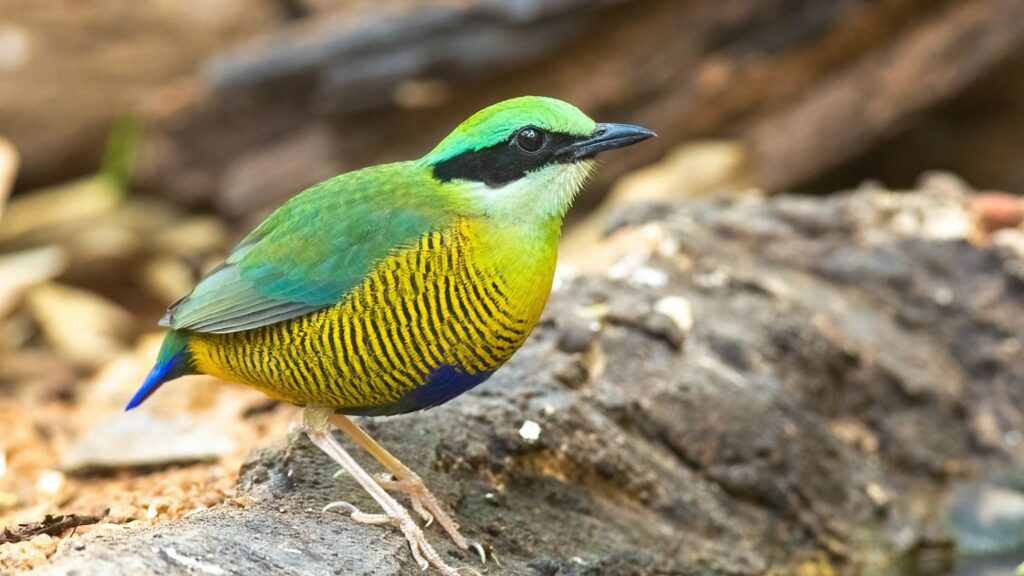
Birds: Bar-bellied Pitta, Blue-rumped Pitta, Silver-breasted Broadbill, Indochinese Babbler, Puff-throated Babbler, Buff-breasted Babbler, Abbott’s Babbler, Hainan Blue Flycatcher, Indochinese Blue Flycatcher.
Overnight: Cat Tien National Park Guesthouse. Breakfast, lunch and dinner.
Day 3. March 20. Cat Tien. Pittas and pheasants.
A full day in Cat Tien. The hides here can produce an extraordinary set of ground birds, and away from them we walk the forest trails for broadbills, kingfishers, trogons and woodpeckers. Cat Tien is also one of the mammal sites of the tour, and we will drop the bird programme without hesitation if the primates give us a chance.
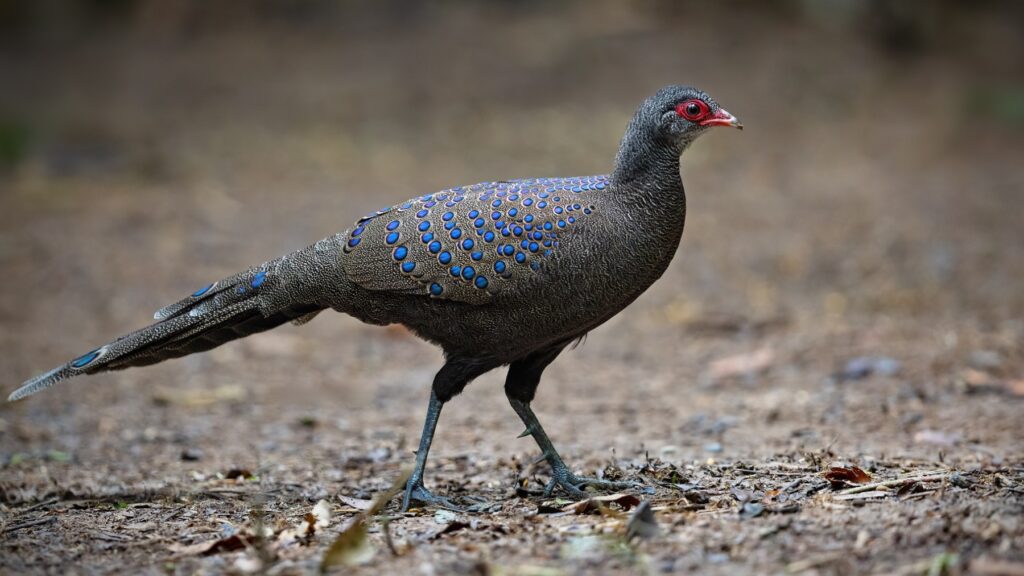
Birds: Bar-bellied Pitta, Blue-rumped Pitta, Germain’s Peacock-Pheasant, Siamese Fireback, Green-legged Partridge, Banded Kingfisher, Black-and-red Broadbill, Banded Broadbill, Orange-breasted Trogon, woodpeckers.
Mammals: Black-shanked Douc Langur, Southern Yellow-cheeked Gibbon.
Overnight: Cat Tien National Park Guesthouse. Breakfast, lunch and dinner.
Day 4. March 21. Cat Tien National Park.
A second full day, run according to what is actually happening in the forest. We may go back to a hide that is producing, spend more time on the trails, or concentrate on mammals. For video this spare day is worth a great deal. Seeing a bird once is one thing. Getting a long undisturbed sequence in good light is another.
Birds: second chances at the pittas, Germain’s Peacock-Pheasant, Siamese Fireback and Green-legged Partridge, plus broadbills and woodpeckers along the trails.
Mammals: Black-shanked Douc Langur, Southern Yellow-cheeked Gibbon.
Overnight: Cat Tien National Park Guesthouse. Breakfast, lunch and dinner.
Di Linh and Nui San Pass
Day 5. March 22. Cat Tien to Di Linh and Nui San Pass.
Some final birding in Cat Tien, then we climb into higher country towards Di Linh and Nui San Pass, also known as Deo Suoi Lanh. The change in elevation brings a completely new set of birds.
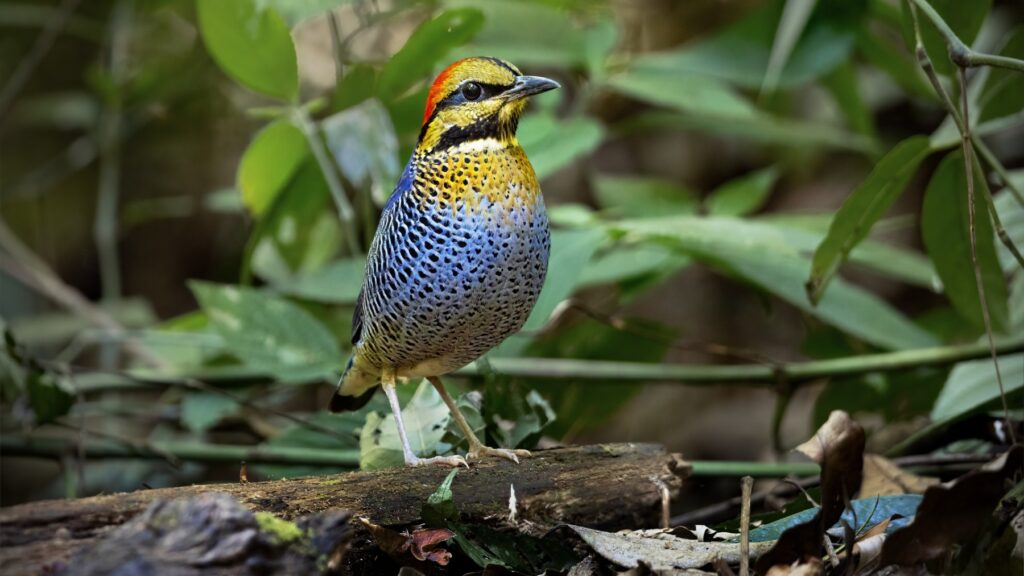
Birds: Indochinese Green Magpie, Annam Prinia, Black-headed Parrotbill, Blue Pitta, Silver-breasted Broadbill, Long-tailed Broadbill.
Overnight: Ivory Falls Villa Resort. Breakfast, lunch and dinner.
Day 6. March 23. Di Linh. Blue Pitta and Indochinese Green Magpie.
A full day around Nui San Pass. The local hides give us our best shot at the magpie and the pittas, and we bird the surrounding forest for the specialities of these hills.
Birds: Indochinese Green Magpie, Blue Pitta, Blue-rumped Pitta, Silver-breasted Broadbill, Annam Prinia, Black-headed Parrotbill, Long-tailed Broadbill, White-bellied Erpornis, Ochraceous Bulbul, Brown-backed Bulbul, White-browed Scimitar-Babbler, Orange-headed Thrush, Hainan Blue Flycatcher, White-throated Rock-Thrush.
Overnight: Ivory Falls Villa Resort. Breakfast, lunch and dinner.
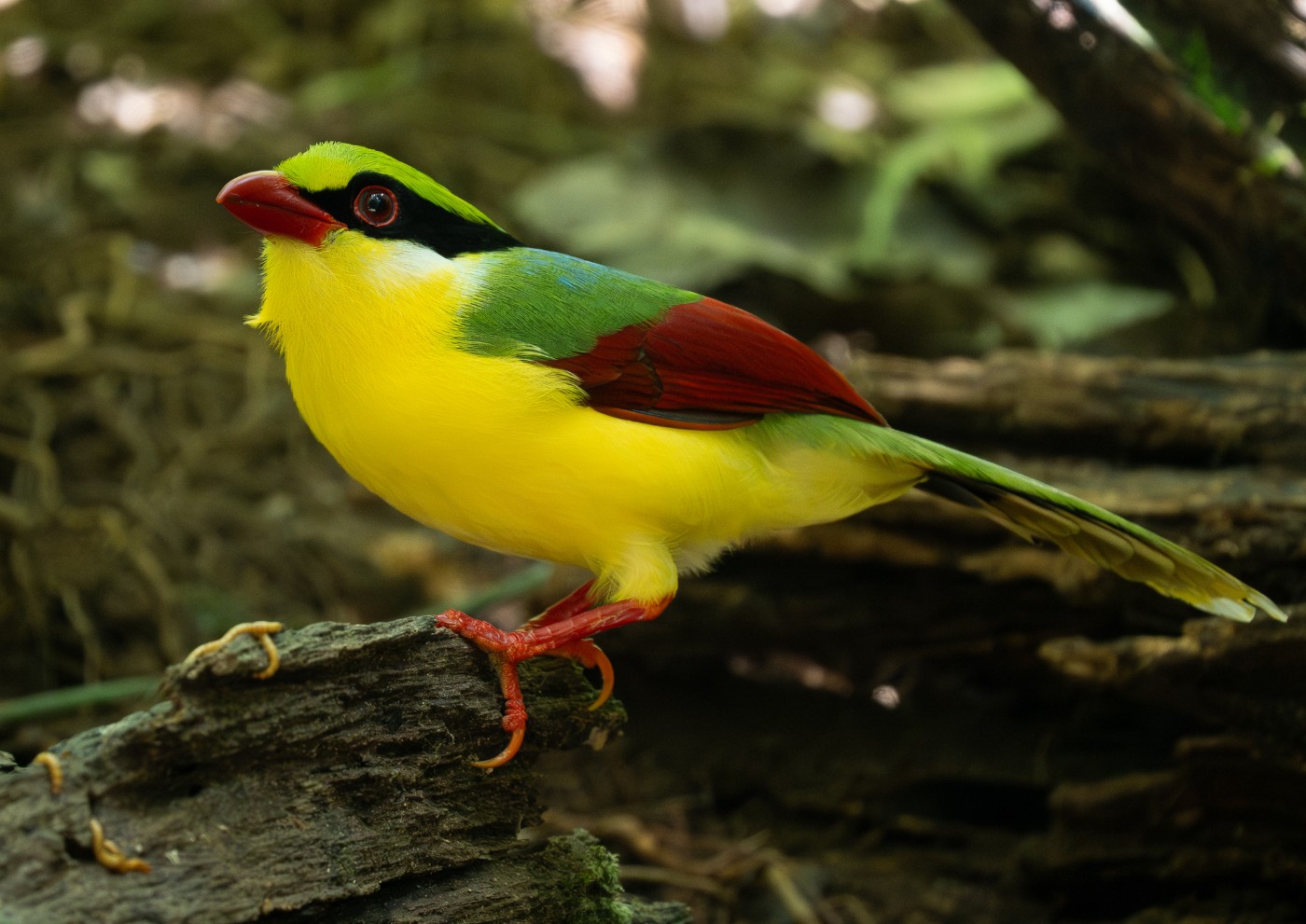
Indochinese Green Magpie, photographed on the Da Lat plateau. Photo: Forest Botial-Jarvis, CC BY 4.0, via Wikimedia Commons.
The Da Lat Plateau
Day 7. March 24. Di Linh to Da Lat.
Another morning in the Nui San area before we continue to the Da Lat Plateau, the endemic heart of southern Vietnam. We start on our first Da Lat site in the afternoon.
Birds: whatever is left over from Nui San, then the first of the plateau birds.
Overnight: Dreams 3 Hotel, Da Lat. Breakfast, lunch and dinner.
Day 8. March 25. Da Lat bird hides.
A day at the best established hides and feeding stations around Da Lat. We use whichever ones are producing immediately before and during our visit.
Birds: Collared Laughingthrush, Dalat Shrike-Babbler, Black-crowned Fulvetta, Rusty-naped Pitta, Silver Pheasant, Indochinese Wren-Babbler, White-cheeked Laughingthrush, White-spectacled Sibia, Langbian Lesser Shortwing, Grey-bellied Tesia, Large Niltava, White-tailed Robin, Snowy-browed Flycatcher.
Overnight: Dreams 3 Hotel. Breakfast, lunch and dinner.
Day 9. March 26. Da Lat endemics.
Today the emphasis moves to forest birding and mixed flocks, and to the most localised birds on the plateau. If a hide is producing something exceptional we keep the freedom to change plan and go back to it.
Birds: Grey-crowned Crocias, Vietnamese Cutia, Vietnamese Greenfinch, Dalat Bush Warbler, Indochinese Barbet, Annam Minivet, Langbian Tit, Annam Sunbird, Plain Minla.
Overnight: Dreams 3 Hotel. Breakfast, lunch and dinner.
Day 10. March 27. Da Lat. Final full birding day.
Deliberately flexible. We go wherever the birds we still want are being seen, whether that means highland forest, mixed flocks or another session in a hide. This is also the backup day for photography and filming, the chance to improve on a view or a sequence rather than settle for what happened the first time.
Birds: anything still missing from the plateau list.
Overnight: Dreams 3 Hotel. Breakfast, lunch and dinner.
Northern Vietnam. Karst, rare primates and Ha Long Bay
From here the trip changes. We no longer need a specialist bird guide every day. We travel with experienced local drivers and use local knowledge where it really counts, above all at Van Long. There are still birds, and binoculars stay handy, but these last days are about wildlife, landscape, culture and photography.
Day 11. March 28. Final Da Lat birding, fly to Hanoi and on to Ninh Binh.
One last morning around Da Lat for any outstanding endemic or photographic target. Around midday we transfer to Lien Khuong Airport for the nonstop flight to Hanoi, where our northern driver takes us south to Ninh Binh. The landscape changes dramatically as forest covered limestone towers rise out of the rice fields, rivers and wetlands. The region is often called Ha Long Bay on land.
Birds: final Da Lat targets in the morning.
Overnight: Trang An Retreat, or a similar nature lodge in the Ninh Binh area. Breakfast, lunch and dinner.
Day 12. March 29. Trang An and Delacour’s Langur at Van Long.
An early start at the Trang An Landscape Complex, where small rowing boats work along quiet waterways between enormous limestone cliffs and through natural caves. It is a slow way to film the scenery after the intensity of the southern forests, and there are birds along the water and the slopes as well.
After lunch we go on to Van Long Nature Reserve for one of the rarest primates in the world. Delacour’s Langur is found only in Vietnam, is Critically Endangered, and is superbly adapted to jagged limestone, moving across cliff faces that look impossible. Van Long protects the most important population left. Here we depend on very local knowledge: the naturalists and boatmen follow the langurs and know which faces and feeding areas have been good recently. We take a quiet sampan into the wetland in the late afternoon and work the cliffs. Rare primates, sheer limestone, reflections and wetland light make this one of the best photographic afternoons of the trip.
Mammals: Delacour’s Langur.
Birds: kingfishers, herons, egrets, raptors and other wetland and forest edge species.
Overnight: Trang An Retreat, or similar. Breakfast, lunch and dinner.
Day 13. March 30. Ninh Binh to Ha Long Bay and on to Hanoi.
We travel northeast to Ha Long Bay, where the limestone theme of Ninh Binh moves out into the sea and hundreds of steep forested islands rise straight out of the water. We board a comfortable day cruise of roughly six to eight hours, long enough to see the bay properly without the cost and the lost time of an overnight luxury cruise. The route runs among the islands, with changing light, sheltered bays, caves and huge karst formations to film. Late in the afternoon we leave for Hanoi.
Birds: coastal birds and raptors as we go.
Overnight: comfortable three star hotel in Hanoi’s Old Quarter, or similar. Breakfast and lunch, dinner in Hanoi.
Day 14. March 31. Hanoi and end of tour.
A relaxed final morning. Depending on flight times there should be room for a short walk in the historic centre, perhaps Hoan Kiem Lake and the Old Quarter, before the airport transfers begin. Extra nights in Hanoi are easy to add if you want to carry on independently.
The tour ends in Hanoi. Breakfast.
Accommodation
Comfortable, well located hotels and lodges rather than expensive luxury properties. Ho Chi Minh City: Ibis Saigon Airport Hotel or similar. Cat Tien: Cat Tien National Park Guesthouse, inside the park. Di Linh: Ivory Falls Villa Resort. Da Lat: Dreams 3 Hotel. Ninh Binh: Trang An Retreat or similar. Hanoi: a comfortable three star hotel in the Old Quarter. Hotels may occasionally be swapped for properties of a similar standard depending on availability.
A note on the hides
The unusual strength of this itinerary is the network of specialised bird hides at Ma Da, Cat Tien, Di Linh and Da Lat. They let you spend long periods with species that are normally very difficult to see well, including several pittas, pheasants, partridges, laughingthrushes and the Indochinese Green Magpie. Our hide strategy stays flexible and we use whatever is producing at the time. Hides may be shared with other photographers where that is appropriate and conditions stay quiet. The trip works just as well if you are not a photographer, since everyone gets unusually close views of normally secretive forest birds.
Important
Birds and mammals are wild and no particular sighting can be guaranteed. Hide productivity, weather, road conditions and flight schedules can require changes. The order of visits, the exact sites, hotels, transport and individual activities may vary when necessary or when a change will improve the trip. Any substitution aims to keep the quality and the character of the itinerary.
Photos: Ha Long Bay by Felix Stahlberg (CC BY 2.0), Germain’s Peacock-Pheasant by JJ Harrison (CC BY-SA 4.0), Blue Pitta by JJ Harrison (CC BY-SA 4.0), Bar-bellied Pitta by egorbirder (CC BY 4.0), Siamese Fireback by cuatrok77 (CC BY 2.0), all via Wikimedia Commons.